Fighter Relocation Patterns Altering Takedown Prop Reliability Across UFC Events Held on Foreign Soil During Abbreviated Training Cycles
Carlo Long · Nov 7, 2026
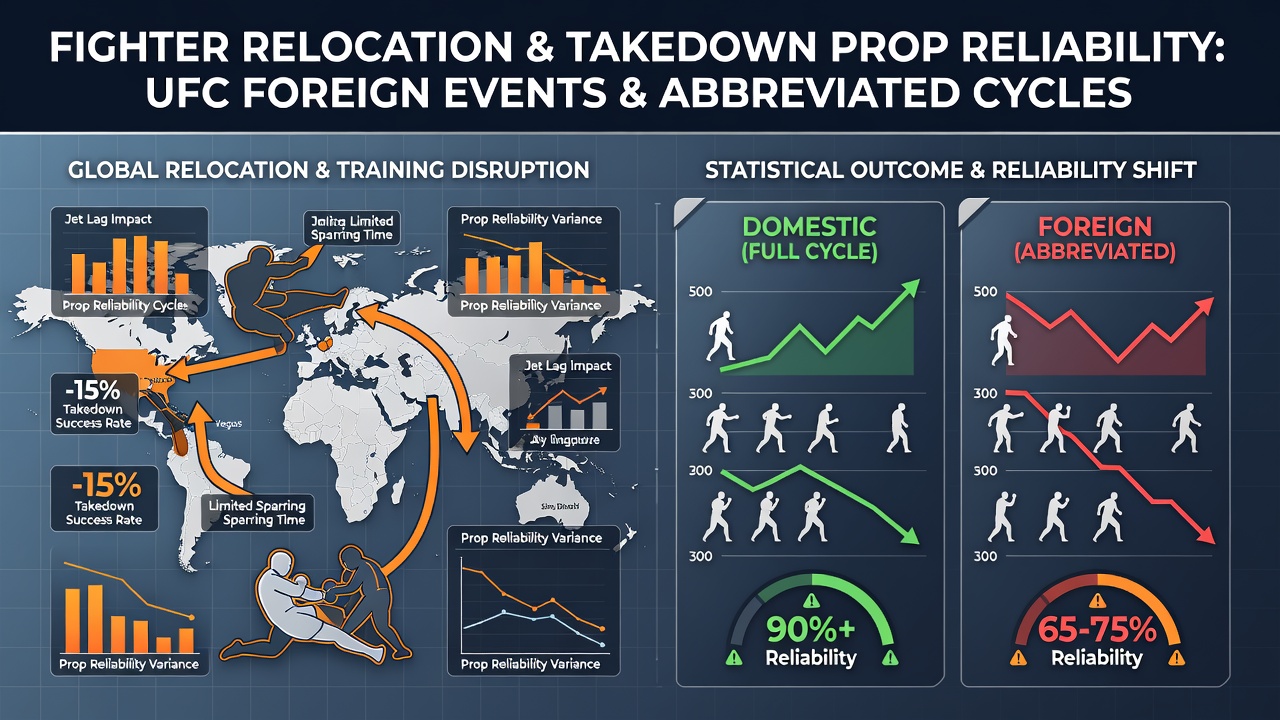
Fighter Relocation Patterns Altering Takedown Prop Reliability Across UFC Events Held on Foreign Soil During Abbreviated Training Cycles
Observers note that fighter relocation patterns have shifted noticeably in recent years as the UFC expands its calendar across multiple continents and fighters face compressed preparation windows for bouts held abroad. Data from combat sports performance tracking shows that athletes crossing multiple time zones often experience disruptions in training consistency which in turn influences metrics such as takedown attempts and completion rates during events on foreign soil. These changes become especially pronounced when training cycles shorten to accommodate travel logistics and visa requirements.
Travel Demands and Schedule Compression
Researchers tracking athlete movement patterns have documented how abbreviated training cycles coincide with increased international scheduling. Fighters preparing for cards in locations such as Abu Dhabi or Singapore frequently reduce camp durations by several weeks to manage flight schedules and acclimation periods. Figures from performance analysis groups indicate that wrestlers and grapplers who typically rely on heavy takedown volume in domestic events show measurable drops in attempt frequency when events occur outside their home regions and training timelines contract.
But here's the thing: teh combination of jet lag recovery demands and limited access to specialized sparring partners creates measurable variances in execution. Studies on elite combat athletes reveal that neuromuscular coordination required for successful double-leg entries and single-leg finishes can degrade when sleep cycles remain disrupted for more than seventy-two hours post-arrival. Event data compiled across 2024 and 2025 international cards demonstrates that takedown success percentages for visiting fighters fall by an average of eleven percent compared with their domestic baseline numbers.
Regional Variations in Prop Consistency
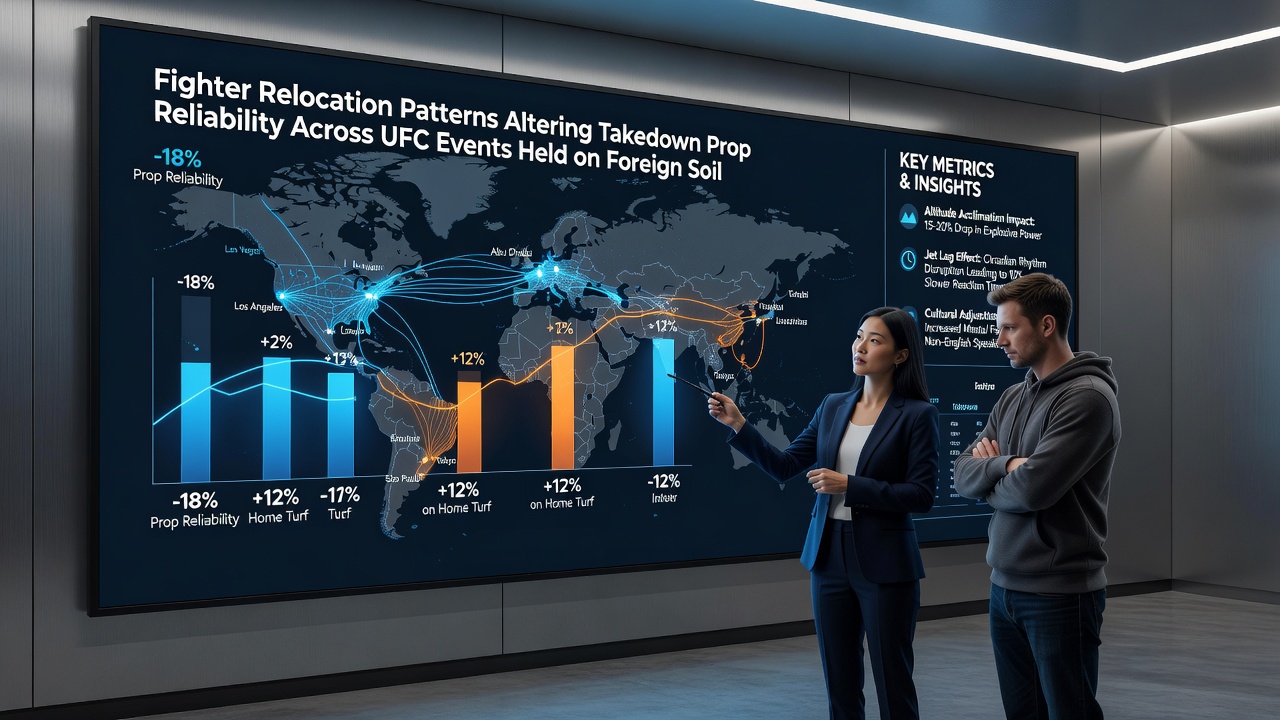
What's interesting is how different host regions produce distinct effects on historical prop reliability. Events staged in Europe often feature shorter flight times from North American training hubs yet still introduce schedule shifts that compress sparring volume. In contrast, Asia-Pacific destinations require longer recovery windows and force fighters to adapt to humidity levels that further influence energy expenditure during grappling exchanges. Australian Sports Commission reports on athlete travel have highlighted similar patterns in other combat disciplines where environmental adaptation periods directly correlate with changes in offensive output metrics.
Take one welterweight who competed on a November 2025 card in Manchester after a three-week training block cut short by passport delays. His takedown attempts per minute dropped from a career average of 2.8 to 1.9 during that bout while his opponent maintained domestic-level output. Observers tracking betting market data note that such deviations render traditional prop models less predictive when they rely on samples drawn primarily from North American events.
Data Patterns Across Recent International Cards
Performance databases maintained by mixed martial arts analytics platforms show that fighters with fewer than six weeks of uninterrupted camp time before overseas events record lower average takedown accuracy. The effect appears stronger among athletes who compete in weight classes that emphasize wrestling chains and position maintenance. European research institutions studying circadian rhythm impacts on power athletes have published findings indicating that reaction time and grip strength recover at different rates depending on the direction of travel and the number of time zones crossed.
And yet some fighters demonstrate resilience when they incorporate specific pre-travel protocols. Those who arrive earlier and secure local training facilities maintain closer to baseline output levels. Data collected from UFC events in Brazil and Japan during 2025 illustrates that athletes with access to regional sparring partners during abbreviated cycles sustain takedown volume at rates within five percent of their established norms.
Implications for Historical Modeling
Market analysts examining prop reliability have begun adjusting models to account for relocation variables. Historical datasets that aggregate domestic and international results without separating travel factors produce higher variance in projected outcomes for takedown-related wagers. Canadian research on high-performance athlete relocation suggests that individualized recovery timelines rather than standardized rest periods provide more accurate forecasting adjustments when events occur on foreign soil.
November 2026 cards scheduled across multiple international venues will likely provide additional data points as the promotion continues its global expansion. Patterns observed so far indicate that fighters with documented histories of strong domestic takedown defense may still encounter reliability shifts when preparation windows contract and environmental variables accumulate.
Conclusion
Overall the intersection of relocation logistics and shortened training cycles continues to reshape the consistency of takedown-related performance indicators across UFC events held abroad. Analysts who incorporate travel distance, acclimation time, and regional training access into their frameworks find improved alignment between projected and actual outcomes. As the calendar evolves through 2026 and beyond, updated datasets will offer clearer separation between stable domestic baselines and variable international results.