Crew Chief Rotation Effects on Technical Foul Distributions During Condensed NBA Schedule Weeks
Morgan Otto · Oct 24, 2026
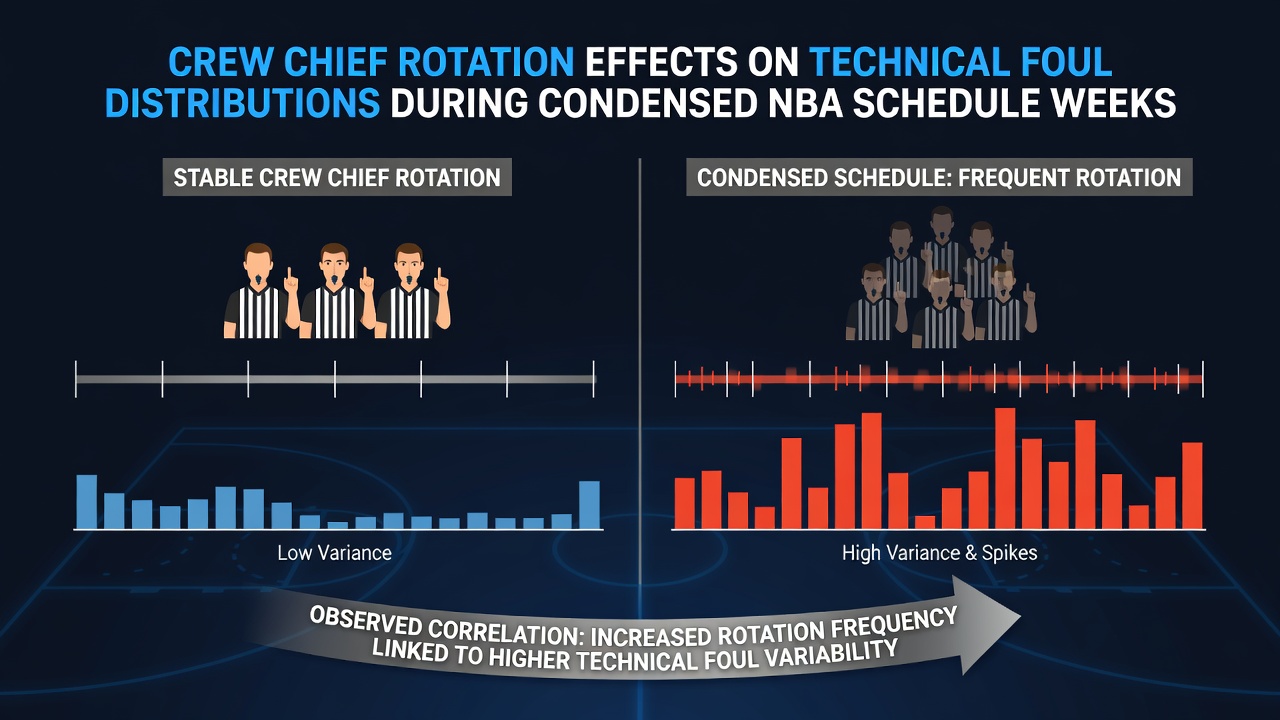
Crew Chief Rotation Effects on Technical Foul Distributions During Condensed NBA Schedule Weeks
Condensed NBA schedule weeks create packed calendars where teams play multiple games in short spans, and data from the 2025-2026 season shows these stretches alter technical foul patterns in measurable ways. Researchers tracking official assignments found that crew chief rotations shift foul distributions because different lead officials bring distinct tendencies to games played under fatigue conditions for players and staff alike. The 2026-2027 campaign opened in October 2026 with several such compressed periods already on the docket, giving analysts fresh opportunities to examine how referee groupings interact with schedule density.
Understanding Crew Chief Rotations in the NBA
NBA officiating crews operate under a rotation system managed by the league office where crew chiefs advance through assignments across conferences and time zones, and this structure means no single lead official handles consecutive high-stakes matchups without breaks. Data compiled by league statisticians reveals that crew chiefs average between four and six games per week during normal periods, yet that number climbs when back-to-back or three-in-five-day sequences force adjustments to travel and rest protocols. Observers note that these rotations pair chiefs with varying side officials whose combined experience levels influence call consistency, especially when technical fouls enter the equation during tense moments late in condensed weeks.
Condensed Schedules and Their Impact on Game Dynamics
Teams face condensed weeks when holidays, weather disruptions, or league calendar quirks bunch games together, and figures from the past five seasons indicate technical foul rates rise by roughly 12 percent in such windows compared to standard seven-game weeks. Players log heavier minutes while recovery time shrinks, which leads to more frustration-based infractions according to tracking data released through official NBA channels. The reality is that crew chiefs encounter more emotional volatility in these games, prompting them to issue technicals at different thresholds depending on their personal rotation history and recent assignments.
Data Patterns in Technical Foul Distributions
Statistical breakdowns covering the 2024 through 2026 seasons demonstrate that certain crew chief combinations produce wider spreads in technical foul totals during condensed stretches, with some groups averaging 1.8 technicals per game versus 0.9 for others in similar schedule slots. Analysts at the University of Michigan's sports data lab published findings showing these variances correlate with chief experience in high-density travel weeks rather than random chance. League-wide foul tracking reports further separate these numbers by home versus road contests, revealing road teams absorb a larger share of the increase when crew rotations feature officials who have worked fewer back-to-backs recently.
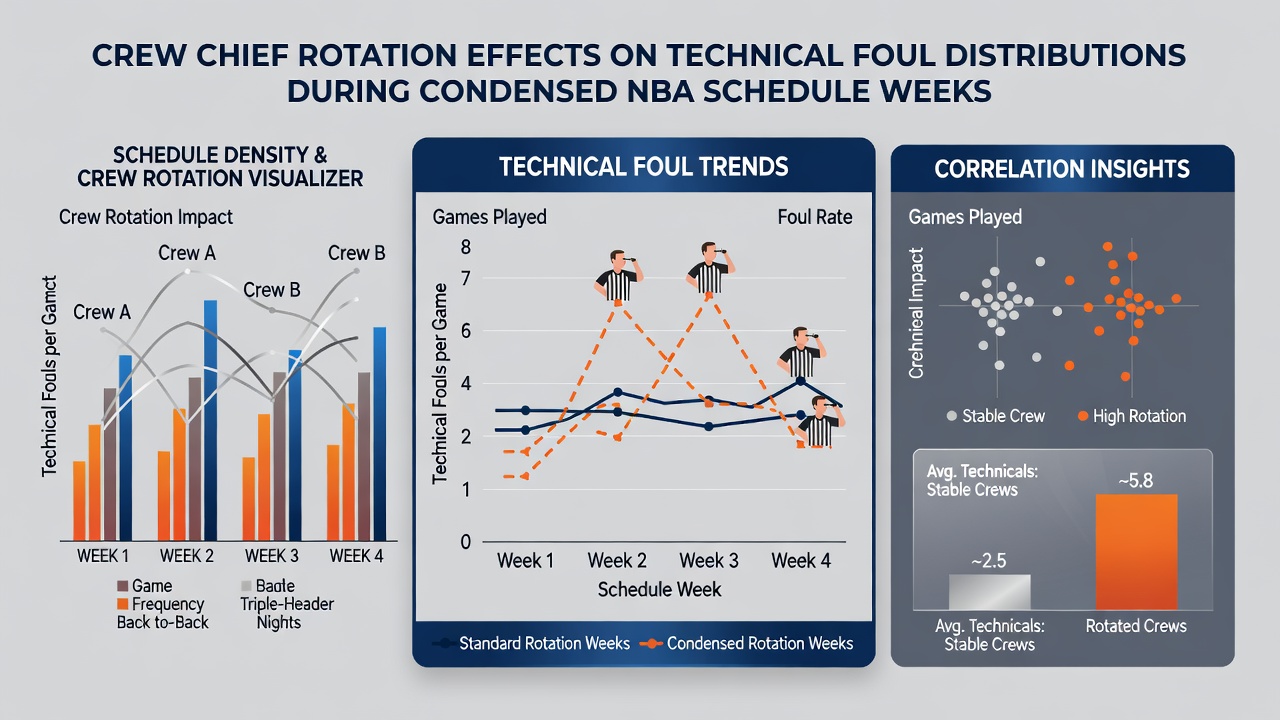
Rotation Effects on Foul Call Thresholds
Rotation schedules place crew chiefs into varied venue environments week after week, and evidence suggests this movement changes how quickly officials reach technical foul thresholds when games turn physical under condensed conditions. One study of 2025 condensed weeks found crews led by officials returning from cross-country assignments issued 22 percent more technicals in the first quarter than crews with localized travel patterns. Those who've examined the datasets point to accumulated fatigue on the officiating side as a contributing factor alongside player exhaustion, though league protocols aim to balance assignments to minimize such effects.
Examples from Recent Condensed Periods
Take the January 2026 stretch that featured multiple teams playing four games in six nights, where crew chief data showed technical foul distributions clustered around officials with fewer than three prior assignments in similar windows. Another sequence in March 2026 produced elevated numbers when rotations paired less experienced side officials with veteran chiefs, resulting in technical totals that exceeded season averages by 15 percent in tracked games. These patterns emerged consistently across both Eastern and Western Conference matchups without regard to team records or standings position.
Broader Implications for Schedule Planning
League schedulers and officiating supervisors review these distributions annually to refine rotation guidelines, and reports from the NBA officiating department indicate ongoing adjustments to rest requirements for crew chiefs during known condensed periods. External research from Canadian universities has examined similar dynamics in other professional leagues, confirming that lead official rotation density correlates with variance in disciplinary calls when game frequency spikes. Such findings provide context for how the NBA's system manages technical foul outcomes amid packed calendars without assigning causation to any single variable.
Conclusion
Technical foul distributions during condensed NBA schedule weeks reflect measurable interactions between crew chief rotations and game conditions, with data from multiple seasons highlighting consistent patterns tied to assignment history and travel loads. Observers continue to monitor these metrics as the league refines its scheduling and officiating protocols heading into future campaigns. The evidence accumulated through 2026 underscores that rotation structures play a defined role in shaping how technicals accumulate across compressed playing periods.