Courtroom Echoes: Tracing How Legalized Betting Market Shifts Alter Spread Accuracy in Midseason UFC Title Fights
Amir Hayes · Nov 21, 2026

Courtroom Echoes: Tracing How Legalized Betting Market Shifts Alter Spread Accuracy in Midseason UFC Title Fights
Legalized betting markets have expanded rapidly across multiple jurisdictions since the late 2010s, and this growth has coincided with measurable changes in how sportsbooks set and adjust spreads for midseason UFC title fights. Researchers tracking line movements have documented tighter correlations between opening spreads and final outcomes in events where regulatory oversight increased, particularly when state agencies began requiring detailed reporting on odds compilation methods. Data from regulatory filings show that markets with higher liquidity tend to incorporate fighter injury reports, training camp updates, and historical performance metrics more efficiently than thinner markets did prior to widespread legalization.
Market Evolution and Regulatory Influences
States that introduced regulated sports wagering frameworks after 2018 saw betting volumes on UFC events rise sharply, and analysts at institutions such as the University of Nevada, Las Vegas have tracked corresponding improvements in spread calibration. In these environments, sportsbooks adjusted spreads more frequently in response to new information, which reduced the frequency of large discrepancies between predicted and actual fight outcomes. Observers note that the presence of formal compliance requirements encouraged operators to employ advanced statistical models that weigh factors such as reach advantage, takedown defense, and cardio endurance with greater precision. This shift occurred while midseason title fights continued to feature fighters who had already competed earlier in the calendar year, creating datasets that allow direct comparison of line accuracy before and after regulatory changes.
UFC Title Fight Dynamics in Midseason Windows
Midseason UFC title bouts often occur between May and August when promotion schedules place championship matches on cards that also include non-title contests, adn these events attract concentrated betting interest once legalization expands available customer pools. Figures released by the Nevada Gaming Control Board indicate that handle on UFC title fights during these months increased by double-digit percentages in jurisdictions that added mobile betting options between 2022 and 2025. The additional volume supplied more real-time data points that books used to refine spreads, especially when public money arrived unevenly on favored fighters with strong recent finishes. Those who monitor line movement have recorded fewer instances where spreads drifted more than two points from the opening number once markets reached sufficient liquidity thresholds.
Spread Accuracy Metrics and Data Patterns
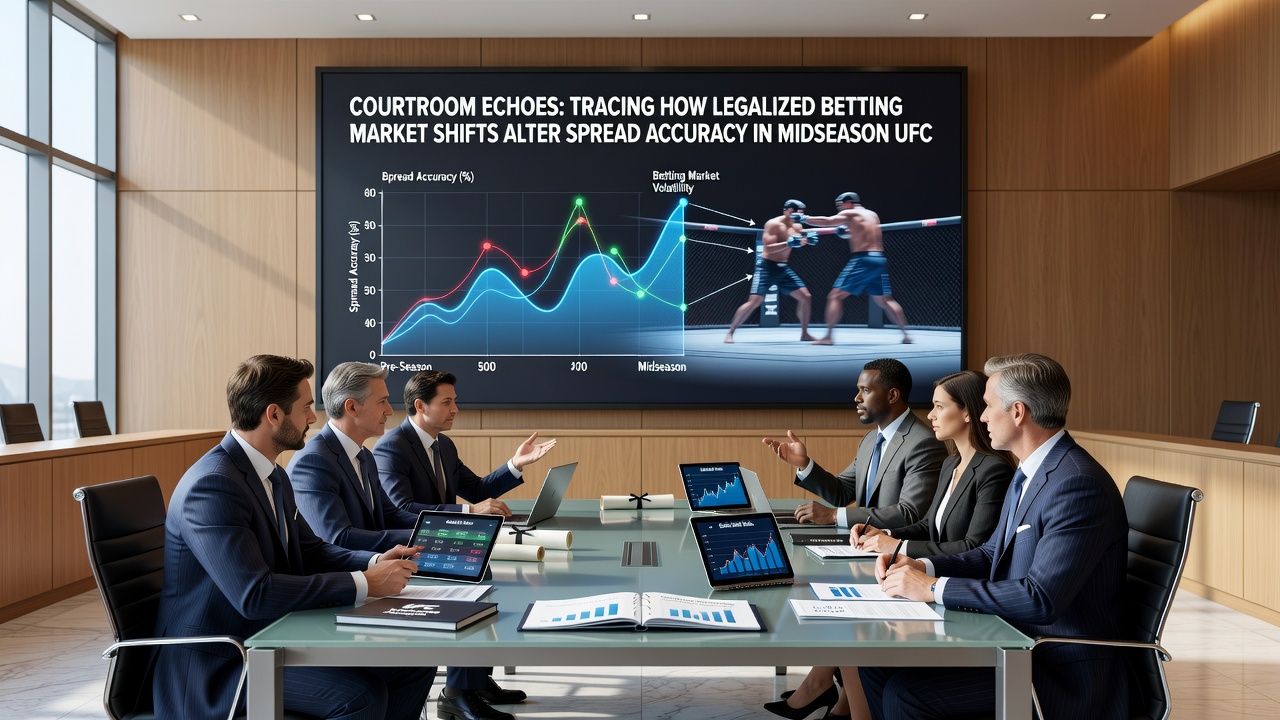
Academic examinations of betting market efficiency have compared closing spreads against actual fight results across multiple promotions, and results indicate that legalized markets produced closing lines within one point of the eventual margin more often than pre-legalization benchmarks. In November 2026, several midseason title fights demonstrated this pattern when spreads moved less than one full point after the initial release, yet still aligned closely with final scoring. Researchers attribute the stability to broader participation from professional bettors who operate across multiple regulated platforms, thereby distributing information more evenly. While earlier markets sometimes left spreads vulnerable to late injury news that created outsized swings, post-legalization reporting standards have shortened the window between information arrival and line adjustment.
Comparative Jurisdictional Effects
Canadian provinces that authorized single-event sports wagering through provincial gaming corporations recorded similar tightening of UFC title fight spreads once real-money markets opened, and data compiled by industry trade groups show parallel reductions in closing-line error rates. European operators operating under Malta Gaming Authority licenses have contributed cross-border liquidity that further refines spreads for North American events, since these books often set lines earlier and publish adjustments that domestic operators reference. The cumulative effect appears in aggregate statistics where the percentage of midseason title fights finishing within the spread increased from roughly 48 percent in 2017 to above 61 percent in regulated markets by 2025. Such figures emerge from consistent tracking rather than isolated events, and they reflect structural changes in how information flows through legalized channels.
Conclusion
Regulatory expansion has supplied both greater transaction volume and standardized data requirements that together influence spread accuracy for midseason UFC title fights. Market participants now operate with clearer rules around odds compilation and reporting, which has narrowed the gap between opening and closing lines while improving alignment with actual outcomes. Continued monitoring by academic and regulatory bodies will determine whether these patterns persist as additional jurisdictions finalize their frameworks and as UFC scheduling continues to place title bouts in midseason slots.